
Key Insights
- Paid ads deliver immediate reach; organic social builds long-term engagement and brand authority. They are ideal for product launches and promotions.
- Organic strategies excel in building brand authority, nurturing community, and sustaining engagement over time.
- A hybrid approach often yields the best results, leveraging paid campaigns for reach while nurturing audiences organically.
- AI tools enhance targeting, scheduling, and performance for both paid and organic campaigns.
In today’s competitive digital landscape, social media marketers face a critical choice: should they invest in paid social advertising or focus on organic social media management? Both approaches have unique advantages, challenges, and ROI implications.
Understanding the differences is essential for making informed decisions that maximize engagement, reach, and conversions.
This article provides a comparative analysis of paid social advertising vs organic social media to help marketers weigh the benefits, limitations, and strategic use cases of paid and organic social media campaigns.
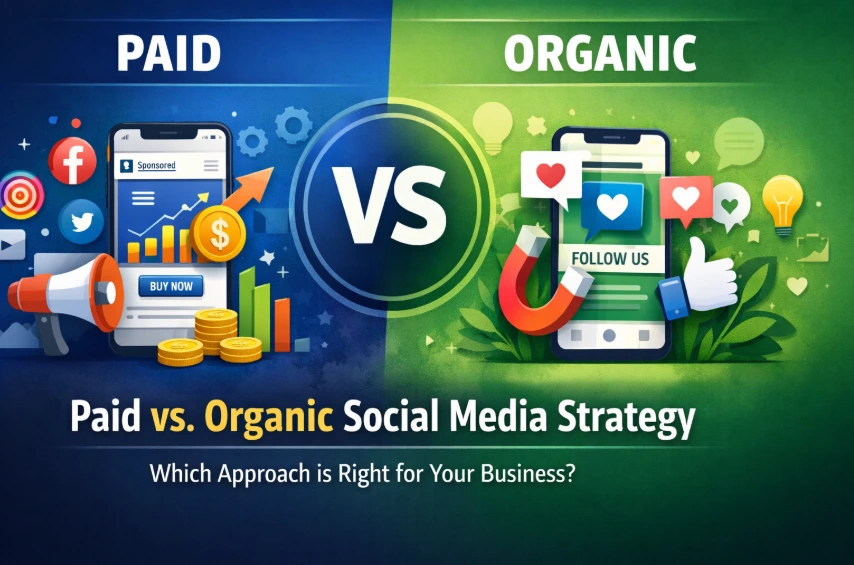
Understanding Paid Social Advertising
Paid social advertising refers to sponsored content on platforms like Facebook, Instagram, LinkedIn, TikTok, or X (formerly Twitter), where businesses pay to reach specific audiences. Key features include:
- Precise Targeting: Leverage demographics, interests, behaviors, and retargeting options to reach ideal audiences.
- Immediate Visibility: Ads appear in user feeds, stories, and search results, generating instant reach.
- Budget-Controlled: Costs are managed through CPC (cost-per-click), CPM (cost-per-mille), or CPA (cost-per-action) campaigns.
- Analytics-Driven: Platforms provide real-time data for measuring ROI, engagement, and conversion metrics.
Benefits of Paid Social Advertising:
- Rapid Audience Growth and Brand Awareness:
Reach large, targeted audiences instantly, accelerating brand recognition and expanding your social presence effectively. - Ability to Test Creative Messaging and Campaigns Quickly:
Experiment with different content, visuals, and ad formats to identify what resonates best with your audience. - Predictable Performance with Measurable KPIs:
Track clicks, conversions, and ROI precisely, enabling data-driven decisions for optimizing campaigns and marketing budgets.
Disadvantages of Paid Social Advertising:
-
- Higher upfront costs compared to organic methods: Paid campaigns require significant initial investment, which may strain budgets, especially for small businesses or startups.
- Short-term gains without sustained content strategy: Results stop when ad spend ends, making long-term brand growth dependent on continuous investment or complementary organic content.
- Requires ongoing optimization and ad spend management: Effective campaigns demand constant monitoring, testing, and budget adjustments to maintain performance and ROI.
Understanding Organic Social Media Management
Organic social media management focuses on building engagement and community without paid promotion. It relies on content quality, consistency, and community interaction.
Key features include:
- Content Creation & Publishing: Posts, videos, and stories designed to engage followers.
- Community Engagement: Replying to comments, participating in discussions, and fostering loyalty.
- Brand Authority: Consistent messaging strengthens brand trust and recognition.
- Algorithmic Reach: Organic visibility depends on platform algorithms and audience interaction.
Benefits of Organic Social Media:
- Cost-effective long-term strategy: Requires minimal financial investment, relying mostly on consistent content creation and engagement to nurture audiences over time.
- Builds authentic relationships with audiences: Encourages meaningful interactions, loyalty, and trust by engaging followers through comments, messages, and community-focused content.
- Strengthens brand reputation and authority: Consistent, high-quality posts showcase expertise, establishing credibility and positioning your brand as a reliable industry leader.
Disadvantages of Organic Social Media
- Slower audience growth compared to paid campaigns: Gaining followers and visibility takes time, making it less effective for immediate reach or rapid conversions.
- Algorithm changes can reduce reach unpredictably: Platform updates may limit post visibility, impacting engagement and requiring adaptive strategies to maintain audience connection.
- ROI is harder to measure and may require extensive data tracking: Tracking results relies on analytics tools and indirect metrics, making performance evaluation less straightforward than paid campaigns.
Comparative Analysis: Paid vs Organic
| Feature / Metric | Paid Social Advertising | Organic Social Media Management |
| Cost | High; based on ad spend and bidding strategies | Low; mostly time and content creation |
| Speed of Results | Immediate visibility and engagement | Gradual growth over time |
| Targeting | Highly precise targeting options | Audience mostly followers & network effect |
| Sustainability | Short-term; stops when budget stops | Long-term; builds brand equity |
| Measurement & Analytics | Detailed KPIs, ROI tracking | Limited; requires custom analytics |
| Brand Authority | Less organic credibility | Builds trust and loyalty |
| Best Use Cases | Product launches, promotions, retargeting | Thought leadership, brand storytelling, engagement |
Choosing the Right Social Media Approach: Paid vs Organic
Combining paid social advertising vs. organic social media efforts often yields the best results. To decide between paid and organic strategies, consider the following factors:
- Campaign Objective: Is your goal to create awareness, engagement, leads, or sales?
- Budget Availability: Do you have resources for continuous ad spend or mostly content creation?
- Audience Size & Reach: Are you targeting a niche audience or mass market?
- Timeline for Results: Do you need quick conversions or long-term growth?
- Content Resources: Can your team produce high-quality content consistently for organic growth?
AI-Optimized Strategy Considerations
Incorporating AI and social media management tools ensures that both paid and organic strategies are smarter, more efficient, and better aligned with your business goals.
AI-optimized tools like scheduling platforms, analytics dashboards, and engagement trackers let you monitor campaigns, respond to your audience, and measure ROI—all from a single dashboard.
You can now:
- Predict which content will perform organically using engagement scoring:
AI analyzes historical data to forecast post performance, helping marketers prioritize content likely to drive engagement. - Optimize ad targeting with AI-driven audience segmentation:
AI identifies high-value audience segments, ensuring paid campaigns reach the right people for maximum ROI. - Automate post-scheduling and monitor sentiment analysis across platforms:
AI tools streamline content publishing, track brand sentiment, and detect audience reactions in real time.
FAQs
When should I prioritize paid social over organic social media?
Prioritize paid social campaigns for immediate reach, product launches, or promotions. Use organic for long-term engagement and brand authority.
How do I measure ROI for paid social campaigns?
Track clicks, conversions, and cost-per-acquisition using platform analytics for accurate performance insights.
Why is organic social media important for businesses?
It strengthens brand authority, nurtures authentic relationships, and provides cost-effective long-term growth.
Can AI improve social media marketing performance?
Yes, AI predicts content performance, optimizes targeting, automates scheduling, and monitors audience sentiment effectively.
Should I combine paid and organic strategies?
Yes, hybrid approaches maximize reach, engagement, and conversions while sustaining long-term audience growth.
Conclusion
Understanding the differences between paid social advertising and organic social media management is essential for effective campaign planning.
The most successful social media strategies leverage a hybrid approach, combining the immediacy of paid ads with the trust-building power of organic content.
Social.com.my helps businesses craft integrated paid and organic strategies that deliver measurable results. Partner with us today and see how our tailored paid social advertising and organic social media management service can help you grow your audience and ROI.